
Smart Water Submetering for Apartments Nairobi: 2026 Guide
10/15/2026
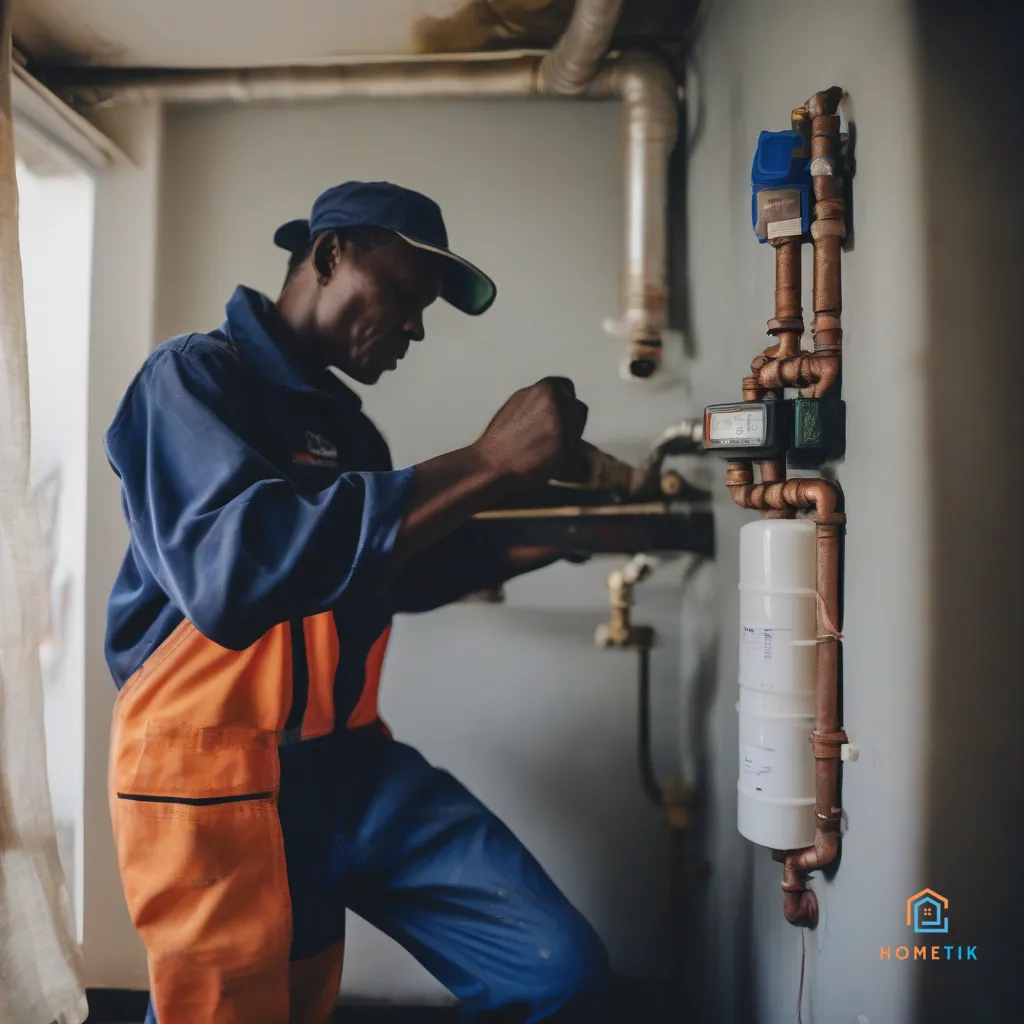
Smart Water Submetering for Apartments Nairobi: The Complete 2026 Landlord & Tenant Guide
Water is one of the biggest hidden costs of running an apartment block in Nairobi. Between Nairobi Water inconsistency, borehole scaling, and shared meters, landlords in Kilimani, Kileleshwa, and Ruiru lose thousands of shillings every month to leaks and disputes. Smart water submetering for apartments Nairobi solves this problem at the source by measuring exact consumption per unit and automating billing in real time.
In this guide, we break down how submetering works, realistic costs in KES, installation challenges unique to Kenyan buildings, and why TapWise smart meters from Hometik are becoming the default choice for landlords, estate committees, and diaspora investors.
Hire Digital AI Staff That Work 24/7 For Your Business
Deploy AI Receptionists, Customer Support Agents, and Sales Assistants that learn your business products, answer WhatsApp inquiries instantly, and never request sick leave.
[!NOTE] Key Takeaways:
- Smart water submetering for apartments in Nairobi typically costs KES 8,500 – KES 15,000 per installed meter, including hardware and professional installation.
- Buildings on KPLC-backed boreholes or shared Nairobi Water lines see up to 30% reduction in water waste within the first 90 days.
- TapWise meters support instant M-Pesa billing, pay-as-you-go top-ups, and remote shutoff for unpaid balances.
- Submetering resolves tenant water disputes in estates like Westlands, Lavington, and South C within a single billing cycle.
- ROI for a 20-unit block averages 6–10 months based on recovered unbilled water and reduced leak losses.
Why Water Costs Are Silently Bleeding Nairobi Apartment Owners
If you manage an apartment block in Nairobi, you already know the pain. The Nairobi Water bill arrives, the borehole pump runs twice as long as it should, and tenants in Block A swear they used less water than Block B.
Standard water billing in most Nairobi apartments is still based on flat rates per unit or equal splits. Both are unfair and both encourage waste. According to landlords we work with in Ngong Road and Kiambu Road, shared water meters account for an estimated 18% – 35% of unbilled consumption every month.
Common pain points we hear from landlords and estate committees include:
Never Miss Another Client Lead or WhatsApp Inquiry
Deploy a custom AI Receptionist that books appointments, answers FAQs in seconds, and converts visitors into paying customers on WhatsApp.
- Tenant disputes over equal-split water bills in buildings like those around South C and Syokimau.
- Unaccounted water loss from underground leaks between the main meter and individual units.
- Borehole over-pumping because no one tracks per-unit usage, so the booster pump runs continuously.
- Manual meter reading every month, which is slow, error-prone, and often delayed.
- Cash flow gaps when some tenants pay late or dispute their flat rate entirely.
Smart submetering replaces guesswork with verified usage data. Each apartment gets its own wireless meter, its own digital wallet, and its own automatic billing cycle — all synced to a landlord dashboard.
What Is Smart Water Submetering for Apartments?
Smart water submetering means installing a wireless, IoT-enabled water meter at every apartment entry point. The meter records flow in real time, transmits data over WiFi or GSM to a cloud platform, and converts that data into a billable amount.
With TapWise smart water submeters available through Hometik, the entire cycle becomes automatic:
- A tenant consumes water in their unit.
- The TapWise meter records volume, pressure, and any abnormal flow (a hallmark of leaks).
- Data is transmitted to the Hometik dashboard in near real time.
- The dashboard calculates the tenant's bill based on the agreed KES-per-cubic-meter rate.
- The tenant receives an M-Pesa prompt or invoice automatically.
- If the account is empty, the meter can remotely restrict flow until topped up.
This level of automation is a massive upgrade from clipboards and manual readings — and it works even when the estate loses Nairobi Water supply and switches to a borehole.
[!TIP] Upgrade Property Security: Explore keyless smart locks and IoT submeters with professional installation included: Shop Smart Home.
Real Costs in KES: Smart Water Submetering for Apartments in Nairobi
Pricing depends on building type, plumbing configurations, and whether you need WiFi, GSM, or hybrid connectivity. Below is a realistic breakdown based on 2026 Nairobi installations.
| Scope | Typical Cost (KES) | Notes |
|---|---|---|
| Supply and install 1 TapWise submeter (WiFi) | 8,500 – 11,000 | Best for buildings with stable WiFi coverage |
| Supply and install 1 TapWise submeter (GSM) | 11,000 – 15,000 | Ideal for standalone or borehole-fed blocks |
| Billing dashboard setup (per building) | 5,000 – 12,000 | One-time configuration and tenant onboarding |
| Per-unit plumbing retrofit (if needed) | 2,500 – 6,000 | Only if the current pipe layout cannot accept a meter |
| Annual cloud and support | 1,200 – 2,400 per meter | Includes firmware updates and remote diagnostics |
| Bulk installation (20+ units) | Negotiated | Discounted 10–20% for estate-wide rollouts |
For a typical 20-unit apartment block in Kileleshwa, expect an all-in cost of KES 220,000 – KES 320,000 including retrofit work. Most landlords recover this within 6–10 months through recovered water revenue and reduced leak losses.
TapWise vs Traditional Metering: A Direct Comparison
| Feature | Traditional Meter | TapWise Smart Submeter |
|---|---|---|
| Reading method | Manual | Automatic, cloud-synced |
| Billing frequency | Monthly | Real time or on-demand |
| M-Pesa integration | None | Built-in |
| Leak detection | None | Yes, alert-based |
| Remote shutoff | No | Yes |
| Tenant dispute resolution | Slow, manual | Instant, data-backed |
| Nairobi Water / borehole hybrid | Unmanaged | Fully supported |
How Installation Actually Works in Nairobi Buildings
Every install follows a four-step process that Hometik technicians handle end to end. The average apartment takes 45–90 minutes per unit.
Step 1: Site Survey
We map existing pipework, water sources (Nairobi Water, borehole, or both), and locate the main shut-off. This is critical in older buildings around Westlands where pipe runs are not standard.
Step 2: Meter Placement
Each submeter is installed at the unit's incoming line — ideally immediately after the main isolation valve. Where plumbing does not allow this, we install a bypass configuration so future servicing does not interrupt tenant supply.
Step 3: Connectivity and Calibration
We anchor the meter to the building's WiFi or GSM network, calibrate flow rates, and test against the main meter. Calibration accuracy on TapWise meters is typically within ±2%, which matters when you are billing tenants.
Step 4: Tenant Onboarding
Tenants receive a unique account, an M-Pesa paybill or till linkage, and a short walkthrough. Most buildings complete full onboarding within a single day.
Why This Matters More in 2026 Than Ever Before
Nairobi water realities have changed. Between Nairobi Water rationing cycles, Kenya Power voltage fluctuations affecting booster pumps, and rising borehole maintenance costs, the margin for waste is gone.
Landlords with buildings on Kiambu Road and Ruiru have reported that submetering exposed leaks they had been paying for silently for years — some losing up to KES 40,000 monthly through underground pipe failure.
If you also manage short-stay rentals, pairing smart submetering with AI guest support for hotels and Airbnb Kenya creates a fully automated, low-touch guest experience.
Operational Benefits Landlords Rarely Anticipate
Beyond billing, submetering quietly changes how a building operates:
- Predictive maintenance: Sudden pressure drops alert you to leaks before they damage walls.
- Fair tenant relations: Tenants stop disputing bills because the data is transparent.
- Cash flow stability: Prepaid wallets eliminate month-end chasing.
- Insurance and valuation: Smart-metered buildings are viewed more favourably by insurers and valuers.
- Estate committee reporting: Aggregate dashboards give committees real data for AGMs.
Estate committees around Lavington and Karen often pair submetering with automated property viewing bookings on WhatsApp in Kenya to streamline tenant acquisition alongside utility management.
Common Challenges and How Hometik Solves Them
Challenge 1: Unstable WiFi in older buildings. Solution: We deploy GSM-enabled TapWise meters, or install mesh WiFi alongside the metering rollout.
Challenge 2: Borehole water with high mineral content. Solution: We install inline filters and calibrate meters for the specific flow characteristics of borehole-fed systems.
Challenge 3: Tenants unfamiliar with digital billing. Solution: Our team handles tenant onboarding and provides a simple M-Pesa prompt flow tenants already use daily.
Challenge 4: Building-by-building plumbing variation. Solution: Every install begins with a site survey — no two Nairobi buildings are identical, and we quote accordingly.
[!TIP] Managing a property or commercial space? Request a Custom Property Maintenance Quote with dedicated account management, bulk submetering rollout, and ongoing IoT support.
The Financial Case: ROI in Plain Numbers
Take a 20-unit block in South B currently charging a flat KES 2,500 per unit for water.
- Current monthly water revenue: KES 50,000
- Actual consumption (based on metered data): KES 38,000
- Current unbilled loss (leaks, common area, estimates): KES 12,000/month
- After TapWise submetering: losses drop to KES 3,000/month
- Recovery: KES 9,000/month
- Installation cost: KES 260,000
- Payback period: ~29 months on revenue recovery alone, plus savings on pump electricity from reduced borehole runtime.
For buildings on boreholes, the ROI is even sharper because pump runtime — and its KPLC bill — drops measurably once leaks are eliminated.
Who Should Install Smart Water Submeters in Nairobi?
- Apartment landlords managing 5+ units.
- Estate committees with shared water infrastructure.
- Short-stay and Airbnb operators needing fair utility recovery.
- Commercial office blocks in Westlands and Upper Hill.
- Diaspora investors who need remote, verifiable property data.
- Facility managers handling multi-building portfolios.
If you manage a portfolio, combining submetering with move out house cleaning services in Westlands & Kilimani gives you a full-turnaround property management stack.
Pairing Submetering with Broader Smart Building Automation
Smart water submetering is rarely a standalone upgrade. Most landlords we work with pair it with:
- Keyless biometric door locks for tenant and short-stay access control.
- WiFi mesh to support the submeter network and tenant connectivity.
- AI-driven WhatsApp support to answer tenant billing questions, like the systems covered in our guide to automated WhatsApp customer service in Nairobi.
The building that gets all four right becomes dramatically easier to manage — and dramatically more attractive to high-quality tenants.
Frequently Asked Questions
How much does smart water submetering cost for apartments in Nairobi?
Expect KES 8,500 – KES 15,000 per installed meter depending on WiFi or GSM connectivity, plus a one-time dashboard setup of KES 5,000 – KES 12,000 per building. Bulk rollouts of 20+ units typically receive a 10–20% discount. Installation includes calibration, tenant onboarding, and warranty support.
Will TapWise submeters work if my building uses both Nairobi Water and a borehole?
Yes. TapWise meters are fully compatible with hybrid water setups. We install meters at each unit's entry point regardless of source, and the dashboard tracks consumption from both Nairobi Water and borehole supply. This is especially important in buildings around Ruiru and Syokimau where supply is intermittent and boreholes are the backup.
Can smart water submeters help resolve tenant disputes over water bills?
Absolutely — this is one of the biggest reasons landlords install them. Because consumption is measured per unit and visible to both landlord and tenant, disputes that used to drag on for weeks are resolved in minutes with data. Combined with automatic M-Pesa billing, tenants stop arguing about flat-rate splits and start managing their own usage.
Final Thoughts: Stop Guessing, Start Metering
Water is the single most under-managed utility in Nairobi apartment buildings. Between Nairobi Water rationing, borehole scaling, and manual flat-rate billing, landlords lose hundreds of thousands of shillings every year to leaks and disputes that smart submetering simply erases.
Smart water submetering for apartments in Nairobi is no longer a luxury upgrade — it is standard practice for serious landlords, estate committees, and property managers. With TapWise meters from Hometik, you get hardware, installation, M-Pesa billing integration, and ongoing support under one roof.
If you are ready to eliminate water disputes, close the leak gap, and get real data on every unit in your building, the next step is simple.
Explore the full range of smart home hardware and IoT solutions at Hometik Shop, or message our team directly on WhatsApp at 0714 363 140 for a free building assessment.
Fair billing starts with honest data. Get your building metered — and stop paying for water you never used.